Automatic contact tracing for infection control in hospitals

Key Benefits
Why is automatic contact tracing for infection prevention so important?
Nosocomial or healthcare-associated infections (HCAIs) affect over 100 million patients worldwide each year, leading to higher mortality, extended hospital stays and significant financial costs.
In busy hospital environments, people and equipment move constantly, making manual contact tracing slow, incomplete and unreliable. Effective contact tracing is essential to identify exposure events early and prevent infections from spreading.
Automated digital contact tracing delivers accurate, real-time insight into who has been in contact with an infected person or contaminated asset. This enables infection prevention teams to act quickly, break transmission chains and maintain a safer clinical environment for patients, staff and visitors.
How the RFiD Discovery infection control solution works

Wristbands and staff badges
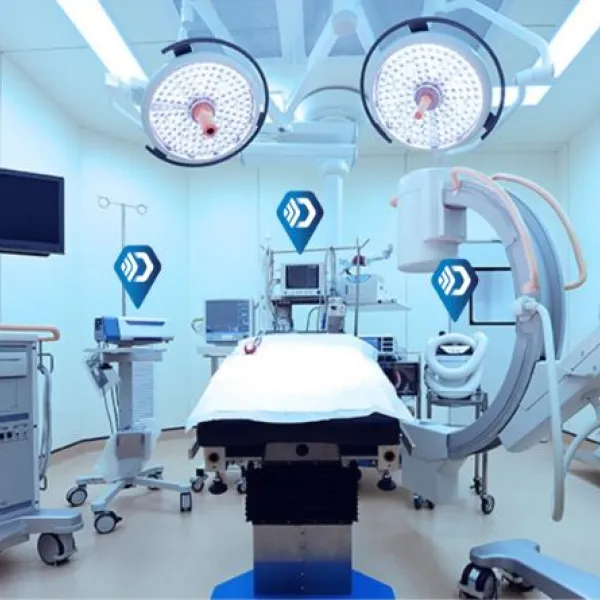
Patients receive a BLE wristband on admission and staff wear BLE-enabled ID badges. In addition, medical equipment can be BLE tagged for real-time asset location tracking. Staff can easily report suspected infections via an app to enable quick investigation.

Reader infrastructure
A network of BLE gateway readers and anchors installed throughout the hospital captures location and proximity data and transmits it to the central RFiD Discovery infection control database. If stored data is not downloaded within a specific time, the infection control team is notified, so they can ‘pick up’ the data with a mobile reader.

Analysis and real-time alerts
This is integrated with other hospital systems and automatically builds contact histories, highlights hotspots, and identifies potential infection chains. Infection control teams also receive real-time alerts and have access to analytics dashboards and automated workflows to support decision-making.

BLE patient wristband

BLE enabled staff badge
Why hospitals need automated contact tracing?
1. Real-time contact visibility for prevention and control
The system provides complete, time-stamped interaction histories between:
- Patients
- Staff
- Visitors
- Equipment (pumps, beds, monitors)
- Rooms and zones
This dramatically improves the precision of infection investigations and prevention measures.


2. Faster outbreak containment for patient and occupational safety
With immediate visibility of exposure events, teams can:
- Identify and isolate affected individuals
- Manage cleaning and decontamination more effectively
- Break transmission chains quickly
3. Reduced administrative workload
Because the system automates logging, reporting and tracing, clinicians spend less time on manual investigation and more time on care.

Key features for infection prevention teams
Automatic contact detection
Tags store close-contact events, capturing:
- Duration
- Distance
- Location
- Person/device IDs
High-precision risk modelling
Rules can be tailored to different infectious diseases, including:
- Minimum duration of exposure
- Maximum distance for “close contact”
- Automatic classification of high/low risk events
Automated contact tracing reports highlight infection risks
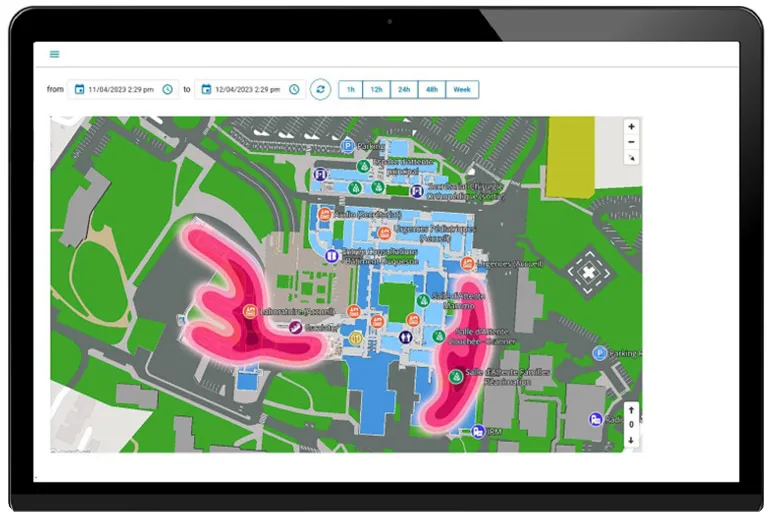
RFiD Discovery’s contact tracing reports show the movements of patients, staff and tagged equipment. Filters enable viewing by location, time scale, or person. The information includes the exact length of time spent with specific contacts or in specific areas to calculate exposure.
Real-time hotspot heat maps can highlight high risk areas to trigger standard infection control precautions. Data can be easily exported for viewing and analysis.
Easy implementation with a budget-friendly entry-level solution
For hospitals looking for a rapid and cost-effective way to strengthen infection prevention, we also offer an entry-level automated contact tracing solution. This streamlined setup requires only BLE wristbands and staff badges, together with a small number of gateway readers placed in strategic high-traffic areas such as entrances, elevator lobbies and stairwells.
Extended capabilities beyond infection control
RFiD Discovery’s automated contact tracing is part of a broader RTLS platform that can also support:
- Asset tracking of medical devices and beds
- Patient flow optimisation
- Sterilisation tracking
- Automated cleaning and maintenance workflows
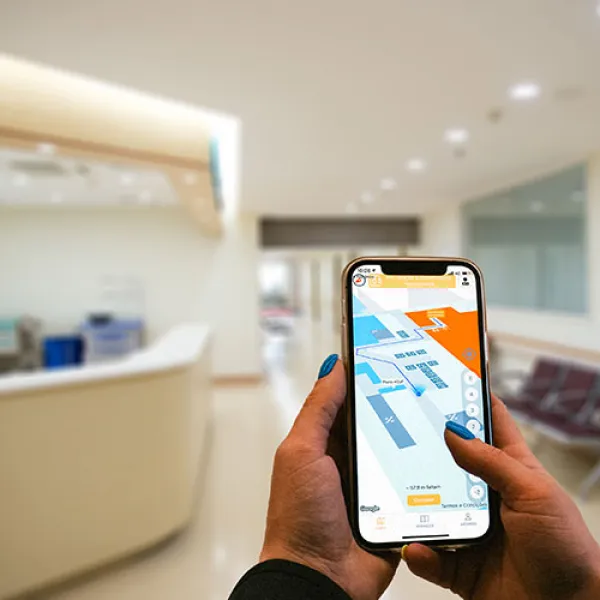
- Wayfinding app for patients, visitors and hospital staff
Frequently asked questions (FAQs)
What is automated contact tracing in hospitals?
A digital system that uses BLE tags and location data to map proximity events between people, devices, and locations, allowing faster identification of infection pathways.
How does automated contact tracing prevent infections?
By giving infection control teams instant insight into who was exposed, where exposure occurred, and which actions—cleaning, isolation, notifications—need to happen immediately.
Is data privacy protected?
Yes. Staff “blind zones” prevent recording of off-duty locations, and all data is handled according to hospital privacy and security standards.
Can the system integrate with other hospital systems?
Yes. It can connect to other systems including the patient record, laboratory result, hygiene and management system via HL7 ADT, SIU and REST APIs as well as other interfaces.
Find out how automatic contact tracing can support containment of potential outbreaks and more proactive infection management
Download brochure