
RFID stock management for healthcare

Benefits
Real-time inventory visibility to prevent stockouts, reduce waste and protect high-value items
Managing healthcare inventory across storerooms, wards and point-of-care locations is complex, time-critical and costly when visibility is limited. Manual processes and barcode-based systems often result in inaccurate stock records, overstocking, expired items and stockouts of critical supplies.
The solution
RFiD Discovery’s RFID stock management for healthcare provides real-time inventory visibility for medical consumables and high-value items, helping healthcare providers maintain availability, reduce waste and streamline replenishment.
The solution allows healthcare providers to automatically track, manage and optimise inventory across multiple locations.
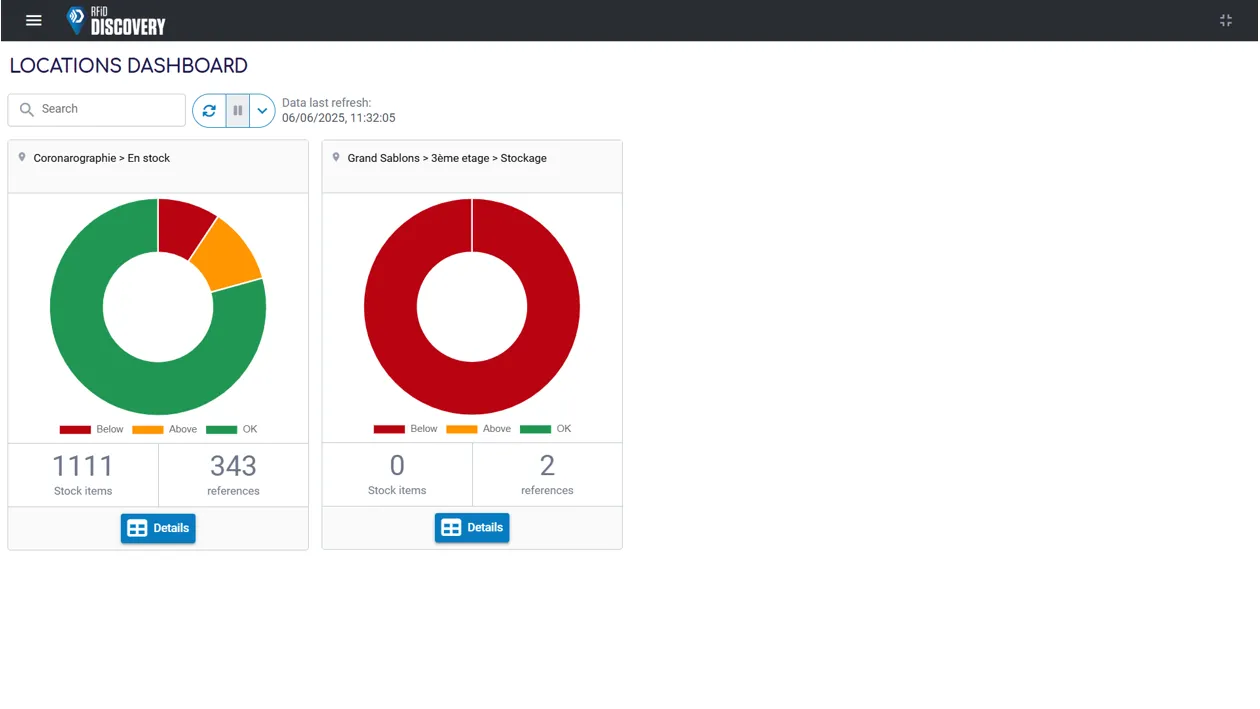
Example of stock level monitoring
The solution is ideal for healthcare environments of all sizes - from small storage areas and cabinets to entire hospital wards, care homes, clinics, and even ambulance vehicles - delivering smart inventory control across all locations.
Whether it's secure point-of-care storage with the RFID smart cabinets, fast and efficient restocking through the theatre kitting solution, or ensuring emergency readiness with resus carts, RFiD Discovery helps make sure the right supplies are always available.
Key benefits of RFID stock management
- Real-time hospital inventory visibility across storage areas and clinical locations
- Reduced expired stock and waste through expiry-date awareness and alerts
- Fewer stockouts of critical medical supplies
- Faster audits and improved staff efficiency
- Secure tracking of high-value healthcare items such as implants and specialist kits
Proven results in healthcare
In a real hospital deployment at the cardiology department of Hospices Civils de Lyon, the solution delivered:
- 37% reduction in overall stock levels
- Over 50% reduction in overstocked items
- 1,800+ RFID tags read in approximately 10 minutes
These results demonstrate how RFID stock management can rapidly improve accuracy, efficiency and cost control in clinical environments.
Transforming inventory at Hospices Civils of Lyon
How does the stock management solution work?

Step 1: Tag items on receipt
- Upon delivery, each item is tagged with a discreet RFID label using UHF technology.
- These paper-based labels can be easily generated using an RFID label printer, offering a flexible and affordable alternative to other tag types.
- Each tag ID is automatically linked to item details such as product type and purchase date in a centralised database for a real-time inventory system.
- A variety of label formats ensures compatibility with various equipment.

Step 2: Automatically scan inventory
- Tagged items are automatically scanned using a combination of fixed and mobile readers.
- Each scan instantly updates the hospital database - no manual input needed.
- The software automatically processes the RFID label and updates the hospital database in real time.

Step 3: Monitor stock levels
- The RFiD Discovery platform provides instant visibility of inventory data, including department allocation, and entry/exit logs.
- The system automatically connects product data, expiry dates, and locations, to alert staff when stock is nearing expiry dates or running low.
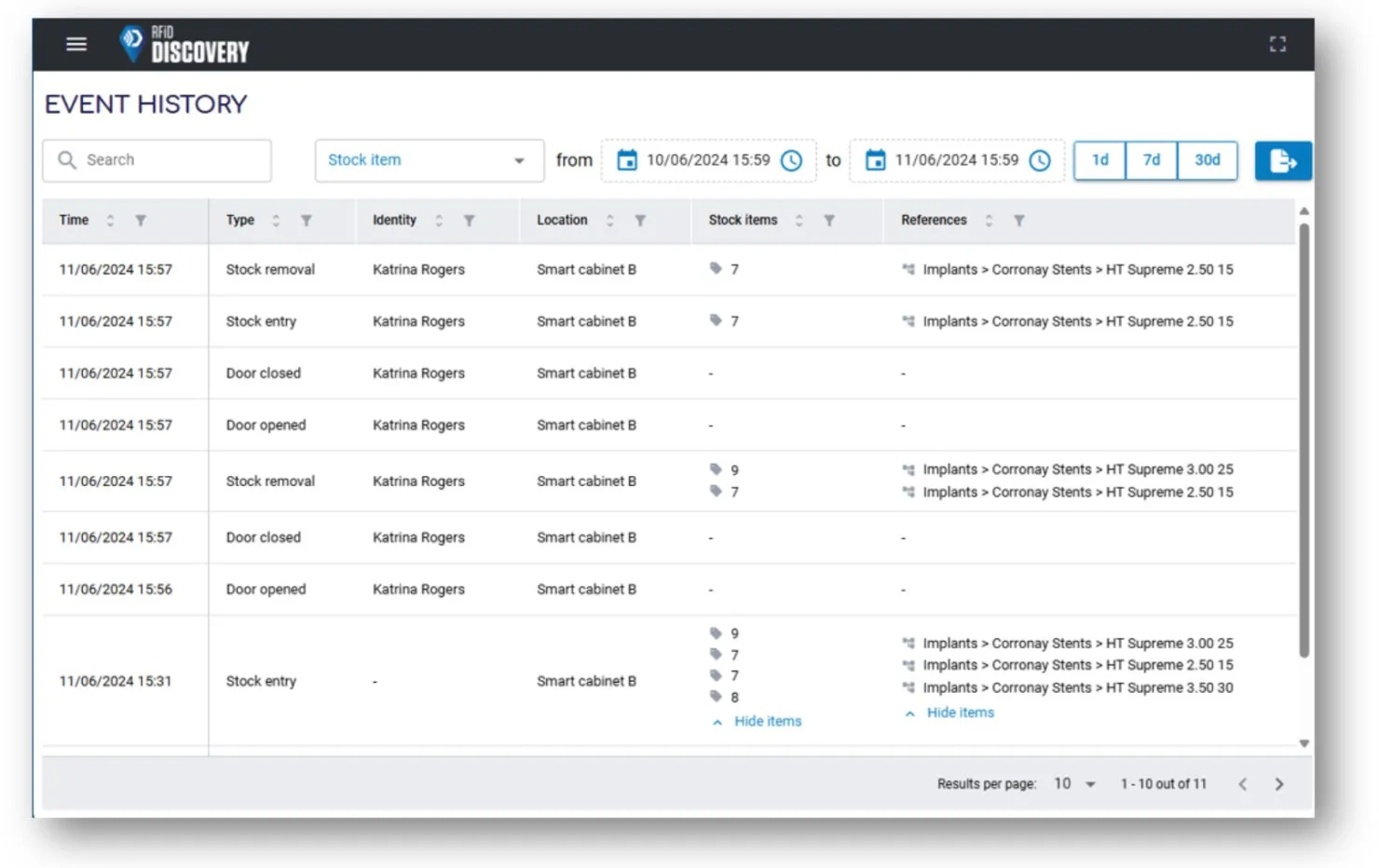
Example of event history
RFID stock management reader and storage options
- Handheld RFID readers, ideal for audits in tight spaces
- Mobile trolley readers which are able to read tags from up to 11 metres away for rapid stock checks
- Fixed readers for continuous real-time inventory monitoring
- RFID smart cabinets for controlled access to high-value items
- RFID-enabled resus and sepsis carts that continuously monitor contents to ensure items required in an emergency are always on hand
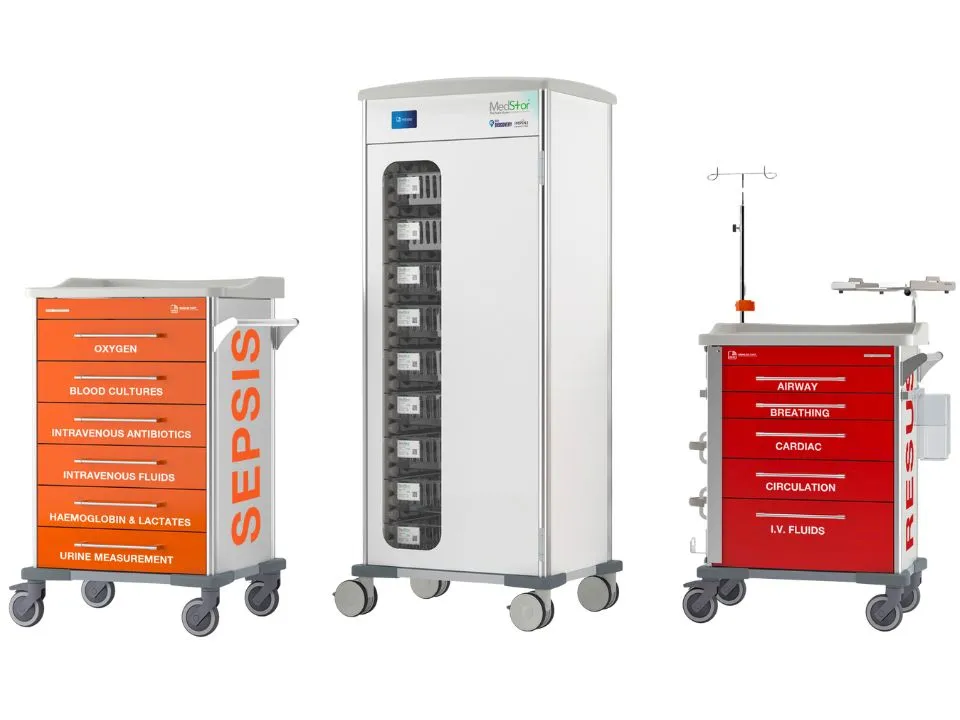
Our stock management solutions include:

Resus and sepsis modular carts
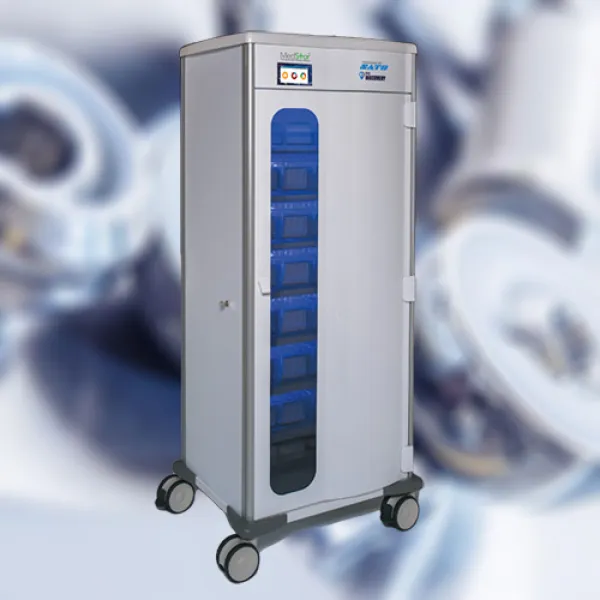
RFID smart cabinets

Theatre kitting solution
Frequently Asked Questions (FAQs)
What is RFID stock management in healthcare?
RFID stock management uses RFID tags and readers to automatically track medical inventory in real-time, providing accurate visibility of stock levels and locations.
How does RFID technology help reduce waste and expired stock?
By linking items to expiry dates and monitoring their movement, the RFiD Discovery platform can alert teams before items expire and help prevent overstocking and misplacement.
How quickly can stock audits be completed?
RFID technology significantly reduces audit time. In one hospital deployment, more than 1,800 tagged items were read in around 10 minutes.
What’s the difference between RFID and barcodes?
Barcodes require line-of-sight scanning one item at a time. RFID can read multiple items simultaneously without line of sight, enabling faster audits and more automated workflows. Read our blog to learn more.
Why should hospitals use RFID stock management?
Hospitals should use RFID stock management because it provides real-time visibility of medical inventory, helping prevent stockouts, reduce expired items and cut waste. RFID technology automates inventory tracking without manual scanning, saving staff time, improving accuracy, and ensuring critical supplies are available when and where they are needed.